 International
 Brasil
 Chile
 Deutschland
 España
 France
 Italia
 Panamá
 Portugal
 UK

A study presented by IVI Institute at the annual congress of the American Society for Reproductive Medicine (ASRM) focuses on patients with excess body weight. This research concludes that women who are overweight or have obesity have worse reproductive outcomes when a frozen embryo transfer is performed after artificial endometrial preparation than when it is carried out in a natural cycle.
This is especially remarkable, as when a woman begins fertility treatment, it is common for all the attention to focus on embryo quality. However, getting pregnant doesn’t depend on the embryo alone. The findings open a new line of reflection in reproductive medicine.
The environment where it must implant, especially the endometrium, also plays a decisive role. Should endometrial preparation be personalized according to each patient’s characteristics?
What is endometrial preparation, and why is it so important?
Before a frozen embryo is transferred, the endometrium must be prepared so that it is receptive at the exact moment of implantation.
Natural cycle
In this process, the woman ovulates spontaneously. The body itself produces the necessary hormones, including progesterone, to prepare the endometrium and support embryo implantation.
Substituted or artificial cycle
In this case, spontaneous ovulation plays no part in the process, and the patient receives hormonal medication, mainly estrogen and progesterone, to prepare the endometrium before the transfer.
This is a widely used strategy because it makes treatment easier to schedule. However, a growing number of studies suggest that not all patients respond in the same way to this type of preparation.
It doesn’t all come down to the embryo
One of the most interesting aspects of this study is that the researchers analyzed only transfers of euploid embryos, that is, chromosomally normal embryos.
Why does this matter? Because once the embryo factor is removed from the equation, it becomes easier to study the influence of other patient-related elements, such as how the endometrium functions or the hormonal environment.
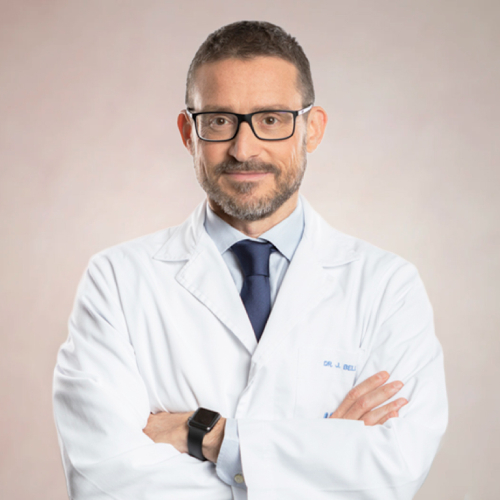
As Dr. José Bellver, a gynecologist at IVI Fertility Valencia and lead investigator of the study, explains: “If we transfer embryos of good quality and normal chromosomal makeup, responsibility for what happens next lies primarily with the maternal environment and, especially, the endometrium.”
In other words, when the embryo has adequate potential to implant, other factors can make the difference between achieving an ongoing pregnancy or not.
What does this finding mean for patients?
It is important to emphasize that this study does not imply that all women who are overweight or have obesity should give up artificial cycles, or that a natural cycle is always the best option.
Every patient has different medical circumstances, and the choice of treatment should be individualized.
However, the results do point to an idea that is increasingly present in assisted reproduction. It is the need to personalize treatments to fit the specific characteristics of each woman.
Main results of the study
The results observed in the research were clear. Women with excess weight who received artificial endometrial preparation had worse reproductive outcomes than those who had their embryo transfer in a natural cycle.
Specifically, they had:
- Lower ongoing pregnancy rates.
- Higher miscarriage rates.
- Lower live birth rates.
These findings were especially significant because they occurred even though all the transferred embryos were euploid.
This suggests that the endometrium and the maternal environment may play a decisive role in reproductive success, especially in women who are overweight or have obesity.
The role of progesterone
Although more studies will be needed to confirm the mechanisms involved, the researchers believe that one of the keys may lie in progesterone.
This hormone is essential for the endometrium to acquire the conditions needed to receive the embryo and allow it to continue developing.
“We think the main mechanism is a deficit of progesterone action at the endometrial level. In women with obesity, it is more common to find suboptimal progesterone levels on the day of transfer when a substituted or artificial endometrial preparation is used,” explains Dr. Bellver.
By contrast, when a woman ovulates naturally, she produces not only progesterone, but also other substances needed for proper implantation and for the early development of the placenta.
This difference could help explain why reproductive outcomes appear to be better when the transfer is performed in a natural cycle.
Toward more personalized reproductive medicine
Obesity is one of the factors that can affect fertility and reproductive outcomes. For this reason, specialists’ first recommendation remains to adopt healthy habits that promote a reduction in body weight whenever possible.
That said, the researchers remind us that losing weight is not always easy and that, even when it is achieved, it is still necessary to keep looking for strategies that help optimize the chances of pregnancy.
For this reason, studies like this one help us better understand which treatment may be the most appropriate for each patient.
“If these data are confirmed, women who are overweight or have obesity and ovulate regularly could benefit more from endometrial preparation in a natural or modified natural cycle than from a completely substituted preparation,” concludes Dr. Bellver.
Reproductive medicine is moving in exactly this direction: offering increasingly personalized treatments to increase the chances of achieving a healthy pregnancy and the birth of a healthy baby.


Comments are closed here.