International
 Brasil
  Chile
Chile  Deutschland
  España
  France
  Italia
  Panamá
  Portugal
  Russia
  UK
UK 
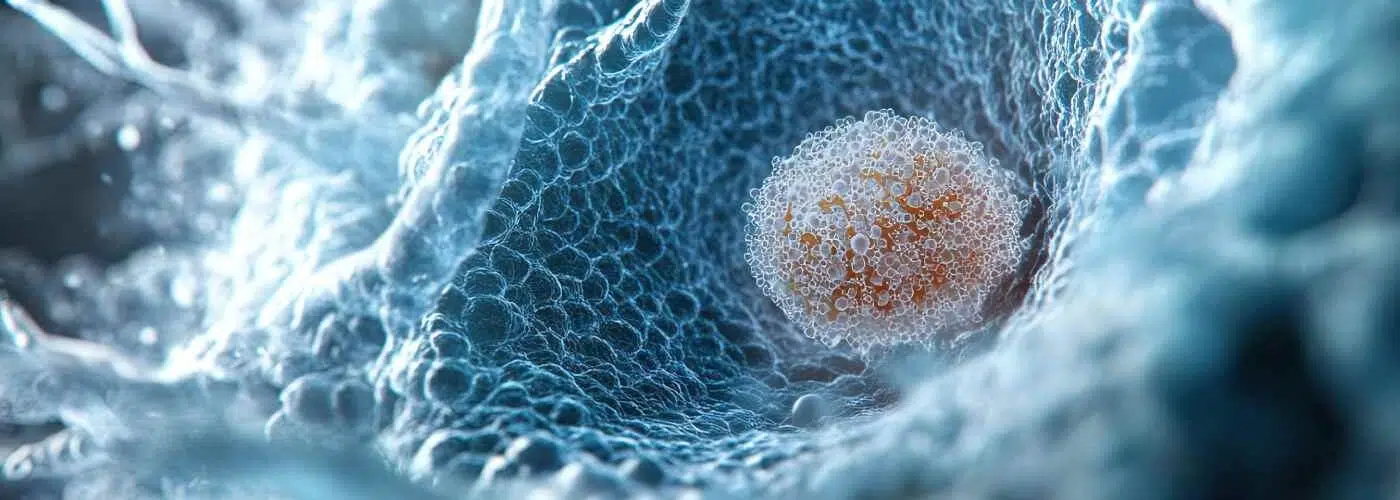
- Researchers from IIS La Fe, the IVI Foundation, Stanford University, and the Babraham Institute have developed the first in vitro model that closely replicates the human endometrium
- This system allows researchers to simulate human embryo implantation up to day 14 of development—the legal limit for study
- This scientific breakthrough opens the door to better understanding implantation failure and developing more personalized strategies for patients facing reproductive challenges
- The study has been published in Cell, one of the world’s most prestigious scientific journals in biology and life sciences
VALENCIA, DECEMBER 26, 2025
An international research team led by the IVI Foundation and IIS La Fe has successfully recreated the implantation of the human embryo during its earliest days of development—one of the most complex and critical steps for a successful pregnancy—within a laboratory setting.
The significance of this breakthrough led to the publication of the study—titled Modeling Human Embryo Implantation In Vitro—in Cell, a high-impact international journal recognized as a leader in the field of cell and molecular biology. The paper, led by Dr. Francisco Domínguez of the IVI Foundation and Dr. Matteo Molè of Stanford University (California), was selected for publication following Cell’s rigorous and highly selective peer-review process, underscoring the study’s importance and its potential to transform the field of reproductive science.
The team’s model recreates a three-dimensional human endometrium using primary stromal and epithelial cells. Using this system, researchers successfully observed the process of embryo implantation in detail up to day 14 of development—a milestone never before achieved outside the human body.
“For the first time, we are able to study the full development of the human embryo up to day 14 using a model that almost perfectly replicates the uterine environment”, explains Dr. Domínguez, lead author of the study. “Having our work published in Cell reinforces the impact of this advancement for the global scientific community”.
Advancing Reproductive Medicine and Basic Research
This new model represents a major leap forward for both basic science and clinical practice. Embryo implantation is one of the most critical—and least understood—phases of pregnancy and assisted reproduction treatment.
“This system will allow us to investigate why implantation fails in specific patients and design more personalized strategies”, notes Dr. Domínguez. “We can even recreate a patient’s endometrium using her own cells, paving the way for more precise, case-specific reproductive medicine”.
The model has been optimized for reproducibility, allowing laboratories worldwide to implement it and launch new research initiatives focused on the earliest stages of pregnancy.
International Collaboration and Next Steps
The study was made possible through a collaboration between IIS La Fe, the IVI Foundation, Stanford University (USA), and the Babraham Institute (UK).
The research team is already working on new applications of the model, including the analysis of molecular factors involved in implantation and the development of potential interventions to improve pregnancy outcomes in patients facing fertility challenges.
“Understanding what happens during these earliest stages is key to supporting individuals seeking pregnancy and to advancing our knowledge of the very beginning of human life”, concludes Dr. Domínguez.
Share on social networks