International
 Brasil
  Chile
Chile  Deutschland
  España
  France
  Italia
  Panamá
  Portugal
  Russia
  UK
UK 
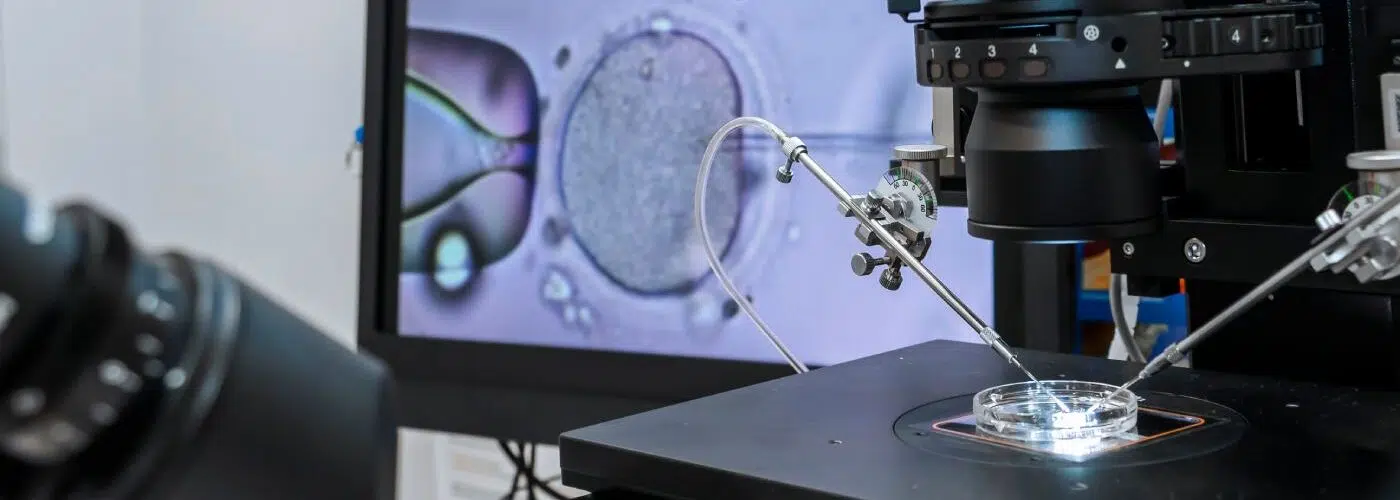
- A pioneering study using advanced genetic and molecular data analysis techniques—including AI algorithms—has identified endometrial genetic profiles that can predict miscarriage risk even with top-quality embryos
- IVI’s presence at the SRI Congress was also marked by another study linking Body Mass Index (BMI) to pregnancy loss risk, which may increase by up to 18%
PUERTO RICO, THURSDAY, MARCH 26, 2026
Endometrial status, together with embryo selection, is key to the success of fertility treatment. Endometrial failure is the focus of multiple lines of research in reproductive medicine, aimed at understanding why pregnancy does not occur.
In this context, a study led by Fundación IVI and IVI RMA Global has identified two existing drugs that could help treat infertility of previously unknown cause. The study, titled Genistein and Pioglitazone as Promising Repurposed Drugs to Treat Endometrial Failure Independent of Endometrial Timing, received the President’s Plenary award following its oral presentation at the Society for Reproductive Investigation (SRI) congress, held from March 24 to 28 in Puerto Rico.
Using a sample of 161 women, researchers identified four types of endometrium based on gene expression profiles. Two of these were associated with high pregnancy rates, while the other two showed a higher risk of miscarriage—even when high-quality embryos were transferred.
In the absence of specific treatments for these conditions, the research team leveraged artificial intelligence and systems pharmacology—based on network modeling—to identify approved drugs capable of correcting endometrial alterations that prevent pregnancy. Among the candidates analyzed, two stood out for their effectiveness and lack of side effects: genistein and pioglitazone. Both have demonstrated positive effects in the laboratory, improving endometrial cell function during decidualization, a key process for successful implantation and pregnancy progression.
“On average, three to five attempts are needed to achieve a cumulative pregnancy rate above 95–98% with high-quality embryos, with around a 65% success rate on the first attempt—resulting in embryo loss along the way. Now, we may be able to improve these outcomes by identifying these profiles in advance and treating them before embryo transfer,” explains Dr. Patricia Díaz-Gimeno, principal investigator of the study.
A shorter and safer path for patients
Personalizing treatment protocols emerge as a key benefit of this study. Being able to assess endometrial status in advance allows clinicians to optimize embryo transfer and use fewer embryos, increasing the likelihood of achieving pregnancy on the first attempt. However, Dr. Díaz Gimeno notes that the results “would require a clinical trial” to confirm “with the highest level of evidence” that they truly “improve standard clinical practice.”
Another important advantage is the potential for rapid clinical implementation: “Our laboratory studies have shown that both compounds can promote decidualization in endometrial cells,” she adds. Decidualization is a process in which endometrial cells undergo functional and morphological changes that are essential for embryo implantation and subsequent development.
Since both compounds are already commercially available, their safety profiles are well established. This could allow their use for this new indication to be implemented more quickly, avoiding the lengthy process required for new drugs to reach the market.
Dr. Díaz Gimeno also highlights that these drugs were identified as capable of molecularly reversing a cause of infertility “previously unknown”: “To discover them, we used a sophisticated large-scale data analysis approach that is pioneering in human reproduction, including systems pharmacology and signature matching (performed by the study’s first author, Antonio Párraga Leo, during a research stay at UCSF, University of California, San Francisco).”
Metabolic factors and pregnancy risk: the impact of BMI
IVI’s presence at the SRI Congress was also marked by another study examining the relationship between Body Mass Index (BMI) and the risk of pregnancy loss. According to the latest Eurostat data, 50.6% of the adult population in the European Union is overweight—a growing global concern that many countries are addressing through public health measures.
Fertility is one of the factors that may be affected in women who are above a healthy weight. In addition to requiring fertility treatments more frequently, the study The weight of loss: Obese patients have a higher risk of pregnancy loss after euploid frozen embryo transfer, presented by IVI RMA at SRI, shows that the risk of pregnancy loss may increase by an average of 18%, with even higher rates observed in cases of severe obesity.
“These findings highlight the importance of fully personalizing reproductive treatments to achieve high success rates, considering each patient’s medical history, lifestyle, and especially body weight. It is essential to provide guidance on the impact of female obesity on pregnancy complications such as miscarriage, which is more frequent even when the embryos transferred to the uterus are chromosomally normal,” explains Dr. José Bellver, gynecologist at IVI Valencia.
The study included a sample of nearly 16,000 patients and also found that women with obesity had a lower likelihood of achieving a live birth compared to non-obese patients, with risk increasing progressively as BMI rises. These findings underscore the importance of counseling patients on the impact of obesity on pregnancy loss—even before transferring euploid embryos.
Adopting healthy lifestyle habits can have a very positive impact on patients undergoing assisted reproduction treatment, as Dr. Bellver explains:
- A balanced diet
- Adequate hydration
- Avoiding alcohol and tobacco
- Regular physical activity adapted to each woman’s needs
Share on social networks