Call us on +34 960 451 185
Patient Portal
International
Brasil Chile Deutschland España France International Italia Panamá Portugal Russia UK
IVI Fertility
    • ASSISTED REPRODUCTION

      • Artificial Insemination (AI)
      • In Vitro Fertilisation (IVF)
      • Genetic IVF (IVF + PGT-A)
      • Reciprocal IVF
      • Egg donation
      • Preservation of Fertility
    • -

      • Highly Complex Reproduction
      • Surrogacy
      • Family Balance
      • Known egg donation
      • Non-Anonymous Egg Donation
      • View all our treatments >
    • ANSWER YOUR QUESTIONS

      • Causes of infertility
      • Your first visit to IVI
      • Egg Donation Program in Spain
      • Egg Donation Program in Portugal
    • OUR RESULTS

      • Success rates
    • ADVANCED TECHNIQUES

      • Vitrification of oocytes
      • Perfect Match 360º
      • EmbryoScope®
      • Semen Donation
      • ICSI
      • MACS
    • MEDICAL SPECIALITIES

      • Ovarian rejuvenation
    • GENETIC TESTS

      • CARRIER Expanded (Genetic Carrier Screening Test)
      • Preimplantation Genetic Testing (PGT)
      • Non-Invasive Prenatal Tests
    • Donors

      • IVI: one of the world’s largest egg banks
    • -

      • Prices
    • IVI PLANS

      • IVI Care
      • IVI Baby Plan
    • Spain

      • A Coruña
      • Alicante
      • Almeria
      • Barcelona
      • Bilbao
      • Burgos
      • Cartagena
      • Castellon
    • -

      • Donostia
      • Girona
      • Ibiza
      • Las Palmas
      • Madrid – Alcorcón
      • Madrid – Aravaca
      • Málaga
    • -

      • Mallorca – Manacor
      • Mallorca – Palma
      • Murcia
      • Pamplona
      • Salamanca
      • Santander
      • Tenerife
    • -

      • Valencia
      • Valladolid
      • Vigo
      • Vitoria
      • Zaragoza
    • Portugal

      • Lisboa
    • United Kingdom

      • London
    • Italy

      • Milano
      • Roma Lancisi
      • Bologna
    • Panama

      • Panama
    • Brazil

      • Salvador
    • Chile

      • Santiago de Chile
    • SPECIALISTS

      • Medical team
    • CONTENTS

      • Blog
      • Press room
Make an appointment
  • ASSISTED REPRODUCTION

    • Artificial Insemination (AI)
    • In Vitro Fertilisation (IVF)
    • Genetic IVF (IVF + PGT-A)
    • Reciprocal IVF
    • Egg donation
    • Preservation of Fertility
  • -

    • Highly Complex Reproduction
    • Surrogacy
    • Family Balance
    • Known egg donation
    • Non-Anonymous Egg Donation
    • View all our treatments >
  • ANSWER YOUR QUESTIONS

    • Causes of infertility
    • Your first visit to IVI
    • Egg Donation Program in Spain
    • Egg Donation Program in Portugal
  • OUR RESULTS

    • Success rates
  • ADVANCED TECHNIQUES

    • Vitrification of oocytes
    • Perfect Match 360º
    • EmbryoScope®
    • Semen Donation
    • ICSI
    • MACS
  • MEDICAL SPECIALITIES

    • Ovarian rejuvenation
  • GENETIC TESTS

    • CARRIER Expanded (Genetic Carrier Screening Test)
    • Preimplantation Genetic Testing (PGT)
    • Non-Invasive Prenatal Tests
  • Donors

    • IVI: one of the world’s largest egg banks
  • -

    • Prices
  • IVI PLANS

    • IVI Care
    • IVI Baby Plan
  • Spain

    • A Coruña
    • Alicante
    • Almeria
    • Barcelona
    • Bilbao
    • Burgos
    • Cartagena
    • Castellon
  • -

    • Donostia
    • Girona
    • Ibiza
    • Las Palmas
    • Madrid – Alcorcón
    • Madrid – Aravaca
    • Málaga
  • -

    • Mallorca – Manacor
    • Mallorca – Palma
    • Murcia
    • Pamplona
    • Salamanca
    • Santander
    • Tenerife
  • -

    • Valencia
    • Valladolid
    • Vigo
    • Vitoria
    • Zaragoza
  • Portugal

    • Lisboa
  • United Kingdom

    • London
  • Italy

    • Milano
    • Roma Lancisi
    • Bologna
  • Panama

    • Panama
  • Brazil

    • Salvador
  • Chile

    • Santiago de Chile
  • SPECIALISTS

    • Medical team
  • CONTENTS

    • Blog
    • Press room
Call us
Request information
26 December 2025

A Lab-Grown Endometrium allows Studying Embryo Implantation Up to Day 14

Home Blog A Lab-Grown Endometrium allows Studying Embryo Implantation Up to Day 14
By the Editorial Committee IVI Blog

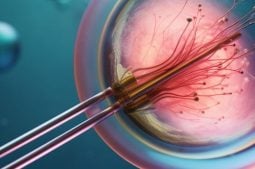
A lab-grown endometrium has been developed by researchers of IIS La Fe, the IVI Foundation, Stanford University, and the Babraham Institute. It’s the first in vitro model that closely replicates the human endometrium. It has been created to simulate embryo implantation up to day 14 of development, the legal limit for such studies.

This breakthrough will help researchers better understand why implantation failure occurs. Also, we will be able to design even more personalized strategies for patients with fertility challenges.

Table of Contents

Toggle
  • Studying Embryonic Development Until Day 14: A Scientific Milestone
  • Development of a Lab-Grown Endometrium to Analyze Embryo Implantation
  • A Boost for Reproductive Medicine and Basic Research
  • Next Steps Towards a More Personalized Medicine

Studying Embryonic Development Until Day 14: A Scientific Milestone

The international team of researchers has successfully developed a laboratory model that reproduces the process of embryo implantation during the earliest stages of development. This is a critical and highly complex step in achieving pregnancy.

This groundbreaking work, titled Modeling Human Embryo Implantation In Vitro, was published in Cell. This is one of the highest-impact international journals. It’s a leading reference in the field of cell and molecular biology. The study, led by Dr. Francisco Domínguez (IVI Foundation/IIS La Fe) and Dr. Matteo Molè (Stanford University), was selected for publication after a rigorous peer-review process. This highlights the significance of the research and its potential to transform the field of human reproduction.

Development of a Lab-Grown Endometrium to Analyze Embryo Implantation

The model developed by the team recreates a 3-D human endometrium using stromal and epithelial cells. This has enabled researchers to analyze embryo implantation in unprecedented detail up to day 14 of development. This is a milestone never before achieved outside the human body.

“For the first time, we can study the full development of the human embryo up to day 14 using a model that almost perfectly replicates the uterine environment,” explains Dr. Francisco Domínguez, researcher at the IVI Foundation and lead author of the study. “Having this work published in Cell reinforces the importance of this breakthrough for the global scientific community.”

Dr. Domínguez explains more about this study:

A Boost for Reproductive Medicine and Basic Research

This pioneering model represents a major advancement for both basic research and clinical practice. Embryo implantation is one of the most critical yet least understood stages of pregnancy and assisted reproductive treatment.

“This system will allow us to study why implantation fails in specific patients and design more personalized strategies. We can even recreate each patient’s endometrium using her own cells, paving the way for more precise, individualized reproductive medicine,” notes Dr. Domínguez.

The system developed through this research has been optimized for reproducibility, making it accessible for laboratories worldwide and facilitating new research lines focused on the early stages of pregnancy.

Next Steps Towards a More Personalized Medicine

Researchers are already working on new applications of the model—from analyzing molecular factors involved in implantation to potential interventions that could improve pregnancy rates in patients with fertility issues. Being able to use a patient’s own cells to replicate her uterus opens the door to even more precise and individualized treatments.

“Understanding what happens during these earliest stages is key to helping those trying to conceive and to advancing our knowledge of the very beginning of human life,” concludes Dr. Domínguez.
Related posts:

  1. ASRM Award to the IVIRMA Global Research Alliance
  2. Latest Advances in Fertility Highlighted at the ASEBIR 2025 Congress
  3. Professor Antonio Pellicer, best researcher in Obstetrics and Gynecology and Reproductive Biology in Spain
  4. Progesterone for IVF: why is it important?
Featured articles
A Lab-Grown Endometrium allows Studying Embryo Implantation Up to Day 14
26 December 2025
A Lab-Grown Endometrium allows Studying Embryo Implantation Up to Day 14
Can People Living With HIV Have Children Without Transmitting the Virus?
1 December 2025
Can People Living With HIV Have Children Without Transmitting the Virus?
Does diabetes affect fertility?
28 November 2025
Does diabetes affect fertility?
Latest Advances in Fertility Highlighted at the ASEBIR 2025 Congress
14 November 2025
Latest Advances in Fertility Highlighted at the ASEBIR 2025 Congress

Request more information, no obligation

Sending

Thank you,

One of our agents will contact you from the phone number Teléfono pide cita

Comments are closed here.

Experts in fertility

  • Assisted reproduction treatments
  • Clinics
  • Egg Donation Program in Spain
  • FAQs

Learn about us

  • Corporate information
  • IVIRMA Global Education
  • IVIRMA Innovation
  • Jobs at IVI
  • Legal Notice
  • Cookies Policy
  • Whistleblowing Policy
  • Internal information channel

Head Offices

  • Calle Colón 1, 4ª planta, 46004 Valencia. España.
  • logo
  • logo
  • logo
  • logo

Quality stamps

logo
logo
logo
logo