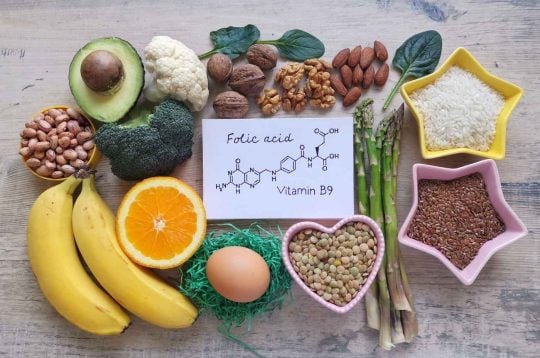
Folic acid is an essential vitamin that plays a key role in overall health, especially for women trying to conceive. While it’s most commonly known for helping prevent neural tube defects during pregnancy, many wonder: Can folic acid actually increase fertility? In this article, we’ll explore the connection between folic acid and fertility, how it… View Article
If you’re thinking and hoping that you’re pregnant, it can come as an unwelcome surprise to have what may appear to be the start of your period. But all is not lost! It’s possible that what you mistake for menstruation bleeding is in fact implantation bleeding, also called implantation spotting (as it’s not such a bleeding). If this is the… View Article
A unicornuate uterus is a congenital malformation of the female reproductive system in which one half of the uterus fails to develop properly. This results in an asymmetrical uterus with only one functional horn. Although it is a rare condition, it can have a significant impact on fertility and pregnancy outcomes. This article explores the… View Article
The 11th International IVIRMA Congress, recently held in Barcelona, brought together over 1,300 professionals, researchers, and academics from 58 countries to discuss the most promising advances in reproductive medicine. For several days, the city became the epicenter of scientific innovation in fertility, genetics, microbiota, artificial intelligence, and biotechnology. Through an extensive program of keynote lectures,… View Article
Artificial intelligence has steadily evolved in the field of assisted reproduction, with the goal of minimizing uncertainty for patients whose main objective is achieving a positive pregnancy result. In this blog, we’ll explore the latest developments in AI, the importance of selecting the right embryos and gametes, and how these innovations are shaping outcomes. Why… View Article
If you have a heart shaped uterus, also known as a bicornuate uterus, it means that you were born with a uterus in which the two sides did not completely fuse together as they normally do. In a heart shaped uterus, the two sides are joined at the lower end, but the top has an… View Article
Before deciding to preserve your fertility, it’s essential to understand what fertility preservation entails. How long can eggs remain frozen? Which is the ideal age to undergo the process? Fertility preservation becomes particularly relevant when reproductive health cannot wait, and professional or personal development takes priority—whether individually or as a couple. In this blog, we… View Article
Fertility preservation has become increasingly significant in a society where having children is not always possible at the desired time. When reproductive health cannot wait and professional development is a priority, medical advancements allow individuals to choose the right moment to start a family. At IVI, we are taking a step forward in oocyte vitrification… View Article
Diet pills are a popular choice for some women who are thinking about becoming pregnant while maintaining physical activity during pregnancy, or for those planning to conceive. Consequently, they opt to combine their daily exercise routine with weight loss pills. How safe is it to take these medications? In this blog, we’ll explain everything you… View Article
Does Ozempic affect fertility? Ozempic has gained significant popularity in recent years for its effectiveness in treating type 2 diabetes and, more recently, as a weight loss option. Its active ingredient, semaglutide, is a GLP-1 (glucagon-like peptide-1) analog, a hormone that regulates blood sugar and influences appetite control. While widely used for these purposes, many… View Article
An antral follicle is the final stage of development of the primordial follicles that are already present in the ovaries of baby girls when they are born. Too miniscule to be seen by the naked eye, there are roughly one million at birth, and these are all the potential eggs a woman is ever going to have…. View Article
 International
 Brasil
  Chile
Chile  Deutschland
  España
  France
  Italia
  Panamá
  Portugal
  Russia
  UK
UK